
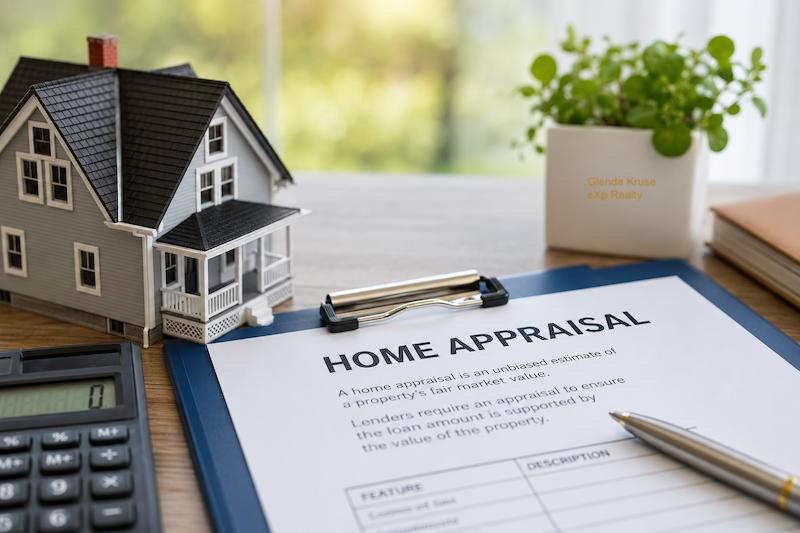
A home appraisal is one of the most important steps in a real estate transaction because a home appraisal determines the property’s fair market value for the lender. Whether you’re buying or selling, understanding how a home appraisal works can help you avoid surprises and feel more confident during the process.
What Is a Home Appraisal?
A home appraisal is an unbiased estimate of a property’s market value completed by a state-licensed or state-certified appraiser. Lenders require a home appraisal when a buyer is financing a home purchase to confirm that the loan amount is supported by the property’s value.
Unlike a home inspection, a home appraisal is not a detailed inspection of repairs or maintenance issues. Its primary purpose is to determine market value based on data, property characteristics, and comparable sales.
However, if the appraiser observes visible safety, structural, or habitability concerns during the appraisal, those issues will be noted in the report because they can impact the property’s value or financing eligibility depending on the loan program and lender requirements.
If the appraisal identifies issues that must be addressed before closing (commonly in FHA, VA, and USDA loans, and in some conventional loan situations depending on lender requirements and overlays), the buyer may request that the seller complete the required repairs as part of the negotiation process. The buyer may also choose to complete the repairs themselves if they have the available funds and the seller declines. However, if an agreement cannot be reached, the buyer may have the option to terminate the contract within the appraisal contingency period.
Once repairs are completed, the lender will require verification that the conditions have been satisfied. This is typically done through a re-inspection by the appraiser, although in some cases the lender may accept photographic or written documentation before clearing the loan to close.
How Does a Home Appraisal Work?
During a home appraisal, the appraiser evaluates several key factors, including:
➢Location of the property
➢Size and layout of the home
➢Overall condition
➢Age of the home
➢Upgrades and renovations
➢Lot size
➢Comparable recent sales in the area
The appraiser then compares the home to similar recently sold properties to determine a fair market value for the home appraisal report.

How Long Does a Home Appraisal Take?
From the time your lender orders the home appraisal, the full process typically takes 1 to 2 weeks (7 to 14 business days).
The home appraisal process includes two main parts:
First, the appraiser completes an on-site visit of the property. This part usually takes 30 minutes to a few hours, depending on the size and complexity of the home.
After the visit, the appraiser completes the more detailed portion of the home appraisal process, which includes researching comparable sales, analyzing market data, making adjustments, and preparing the official home appraisal report.
Once complete, the report is submitted to the lender for review. This is why the full home appraisal process typically takes about one to two weeks from start to finish, depending on the property, market conditions, and loan type.
What Happens If the Home Appraisal Comes in Low?
A low home appraisal means the property’s appraised value is lower than the agreed-upon purchase price. When this happens, the lender will usually only approve financing based on the home appraisal value, not the contract price. This can create a gap that must be resolved before closing.
In this situation, buyers and sellers may:
* Renegotiate the purchase price
* The buyer may pay the difference in cash
* Request a reconsideration of value with supporting data
* Cancel the contract if an appraisal contingency is in place
A low home appraisal does not automatically cancel a deal, but it does require negotiation and review.
What Happens If the Home Appraisal Is Higher Than the Price?
A higher home appraisal is generally good news for buyers. It means the home is valued above the agreed purchase price, which can provide immediate equity at closing.
Even if the home appraisal is higher, the seller cannot increase the contract price once both parties have signed the agreement.
Does Every Home Require a Home Appraisal?
Most financed home purchases require a home appraisal. However, some conventional loans may qualify for an appraisal waiver if the lender has enough market data to support the value.
Cash buyers are not required to complete a home appraisal, but many still choose to order one for peace of mind.
Home Appraisal vs Home Inspection
A home appraisal determines the market value of the property for the lender.
A home inspection evaluates the condition of the home and identifies potential repairs or safety concerns for the buyer. Both are important, but they serve completely different purposes in the home buying process.
Frequently Asked Questions About Home Appraisal
Who pays for the home appraisal?
The buyer typically pays for the home appraisal as part of the mortgage process. Even though the buyer pays the fee, the lender orders the home appraisal to ensure it is completed by an independent, unbiased appraiser.
Can a home appraisal be challenged?
Yes. If there are factual errors or missing comparable sales, the lender may allow a reconsideration of value. The final decision always rests with the lender.
Can a home fail a home appraisal?
A home does not “pass” or “fail” a home appraisal. Instead, the home appraisal determines market value. However, certain loan programs (such as FHA or VA loans) may require repairs if safety or minimum property standards are not met.
What can sellers do before a home appraisal?
Sellers can prepare for a home appraisal by making sure the home is clean, accessible, and well-maintained. Providing a list of upgrades or improvements can also help the appraiser understand the property’s condition and features.
Final Thoughts on Home Appraisal
A home appraisal plays an important role in protecting both buyers and lenders by confirming the fair market value of a property. Understanding how the home appraisal process works helps buyers avoid surprises and helps sellers better prepare for negotiations.
Whether you’re buying or selling in Northeastern Pennsylvania or New York, having a clear understanding of the home appraisal process can help you move through your transaction with more confidence.